
Sex Offender Checks in Trinity County
The Texas Public Sex Offender Registry, operated by the Texas Department of Public Safety, is the authoritative public search channel for Trinity County sex offender records. It supports name, address, city, ZIP, county, and map-related searches. Select Trinity in the county control for a broad Trinity County result set. Use a Trinity County address search when the question concerns one home, road, or nearby area. Start a Trinity County name search only when enough identity details are known to separate people who share similar names.
The Trinity County Sheriff's Office is a local registration contact, but the research found no separate Trinity County registry list, Trinity County mobile app, or Trinity County email-alert system. The practical Trinity County channel order is DPS first, the sheriff for a local registration question, and the national registry for people who may have moved across a state line. A blank Trinity County result should prompt a spelling and jurisdiction check. It should not be treated as proof that no public registration record exists.
Before opening a Trinity County result, gather the full name, any known alias, approximate age, and the last known city or address. Compare several Trinity County profile fields after opening the record. A name alone is too weak for a confident Trinity County match.
Trinity County Registry Search Modes
Each Trinity County registry search mode answers a different question. A Trinity County name search follows a known person and may reveal aliases on the full profile. A Trinity County address search looks outward from a place and can support map or list review. The county filter gives the broadest Trinity County registry view, which is useful for general community awareness but requires careful sorting because it is not tied to one household.
Trinity County map pins need the same care as names. Road placement, city labels, and address types can affect how a Trinity County location appears. Read the Trinity County profile's registering agency, status, and verification details instead of drawing a conclusion from the pin alone.
The DPS search form shown by the source keeps all Trinity County modes in one official system.
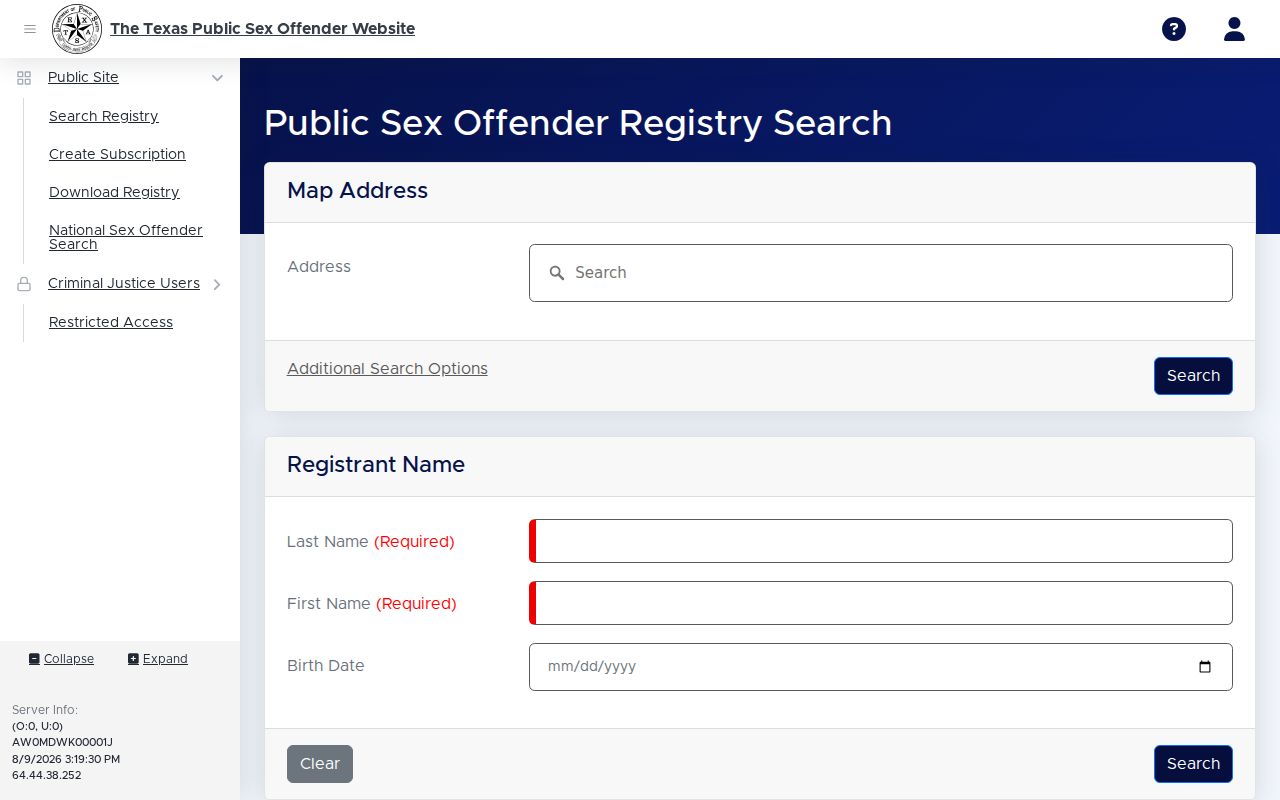
The empty form preserves privacy while showing where Trinity County registry criteria are entered.
How to Search the Texas Public Sex Offender Registry
DPS publishes the statewide registry and the conditions that govern its use. Use the county mode for Trinity County sex offender records, the Trinity County address mode for geographic context, or the name mode for a known person. The live Trinity County interface can change, so labels and radius choices should be read on the form rather than assumed from an older screenshot.
- Open the official DPS registry and read its conditions and warning before entering Trinity County search terms.
- Choose name, address, city or ZIP, or county criteria. Select Trinity for a Trinity County list.
- Review the Trinity County list or map, then compare aliases, age, physical traits, address type, and registering agency.
- Open the full Trinity County profile and note the offense, status, verification details, and agency before relying on the match.
| Field Label | Type | Required | Notes |
|---|---|---|---|
| Last Name / First Name | Text | Search-dependent | Use the Trinity County name mode; profiles may list aliases. |
| Address / City / ZIP | Text | Search-dependent | Trinity County address mode supports a geographic lookup. |
| County | Dropdown | No | Select Trinity for a Trinity County result set. |
| Radius | Dropdown | Address-mode dependent | Use the choices shown live for Trinity County; available distances may change. |
| Search / Clear | Buttons | Not applicable | Run a Trinity County query or reset all criteria. |
| Map / List | Display controls | No | Review Trinity County geographic or list results where enabled. |
Note: Search Trinity County again with fewer fields if a known record is missed, then confirm the person through several profile identifiers.
Inside a Registry Profile
A Trinity County registry profile can combine identity, location, offense, and compliance fields. Exact Trinity County contents vary. Some Trinity County profiles show a risk assessment, while others emphasize registration status or verification details. Read the whole Trinity County record because no one field supplies a complete identity match, and do not assume that a field missing from one public profile does not exist in a protected agency record.
| Name and Aliases | The reported name and other names tied to the Trinity County registration record. |
|---|---|
| Photo and Description | Photograph and physical details in the Trinity County result, including sex, race, age or date of birth, height, weight, hair, eyes, and identifying marks when public. |
| Registered Address | Address and address type in the Trinity County record, plus map context where the interface supplies it. |
| Offense and Statute | Reportable offense, statutory citation, and conviction details available in the Trinity County record. |
| Risk Information | A Trinity County profile may show a Texas risk level, not an automatic federal SORNA tier. |
| Registration Status | Status, verification information, and the registering agency shown in the Trinity County public profile. |
| Other Public Fields | Vehicle, employer, school, victim category, or other Trinity County fields when collected and lawfully displayed. |
Trinity County verification information shows when the registration process last recorded a required contact. It is a key Trinity County clue, not a promise that a person is at the listed place at the moment of the Trinity County search.
Trinity County Sheriff's Registration Role
The Trinity County Sheriff's Office is the Trinity County registration contact for a person who lives in the county outside a municipality where another local law-enforcement authority is responsible. The Trinity County office is at 209 W. First Street in Groveton, with mail at P.O. Box 95. Call 936-642-1424 before going in because the county does not publish a separate Trinity County registry appointment page, fee, or set of registration hours.
Chapter 62 places initial registration, periodic verification, and change-reporting duties on the registrant. The Trinity County office handles its part of that process, while DPS publishes the public statewide record. A Trinity County community member who sees a possible stale address should not confront anyone. Save the Trinity County profile details, note the address or status concern, and report it to the registering agency or the sheriff.
That division of work matters. DPS manages the public search layer. The Trinity County Sheriff's Office deals with local registration and suspected noncompliance within its authority.
Trinity County Sheriff's Office
209 W. First Street
Groveton, TX 75845
Mail: P.O. Box 95
936-642-1424
Texas Registration Levels and Requirements
Texas Code of Criminal Procedure Chapter 62 ties Trinity County registration length to the reportable conviction and the statute's method of calculating the period. It does not reduce every Trinity County profile to a simple three-tier chart. Texas risk labels and federal SORNA tiers are different concepts, and a user reviewing Trinity County records should not translate one into the other.
| Texas Category | General Duration | Public-Use Caution |
|---|---|---|
| Lifetime-reportable offense | Life, subject to statutory exceptions | Verify the exact offense and subsection in Chapter 62. |
| Ten-year category | Generally through the tenth anniversary after release or discharge, as the statute calculates it | Do not count ten years from the conviction date alone. |
| Civil commitment or high-risk notification | Additional notification or supervision rules may apply | This is not the same as every lifetime registration record. |
The Trinity County public profile and the conviction statute are the right pair for interpreting duration. If the subsection is unclear, the Trinity County registering agency or a qualified lawyer can address the individual calculation. A Trinity County registry search should not guess at a release date or removal date.
Trinity County Registry Risk Labels
Trinity County profiles may show high, moderate, or low risk when an assessment has been assigned under the state's process. Those words speak to that Texas assessment. Tier I, II, and III are federal SORNA classification terms. They should not be substituted for the Texas label or used to calculate a Trinity County registration period.
The best Trinity County reading sequence starts with the offense and statutory citation, then the registration status, duration basis, verification date, and registering agency. This avoids two common errors when reading Trinity County profiles: treating a risk label as the offense itself and assuming that the label alone sets how long registration lasts.
For wider state-system context, the TDCJ Parole Division source page shows the separate role of state release supervision.
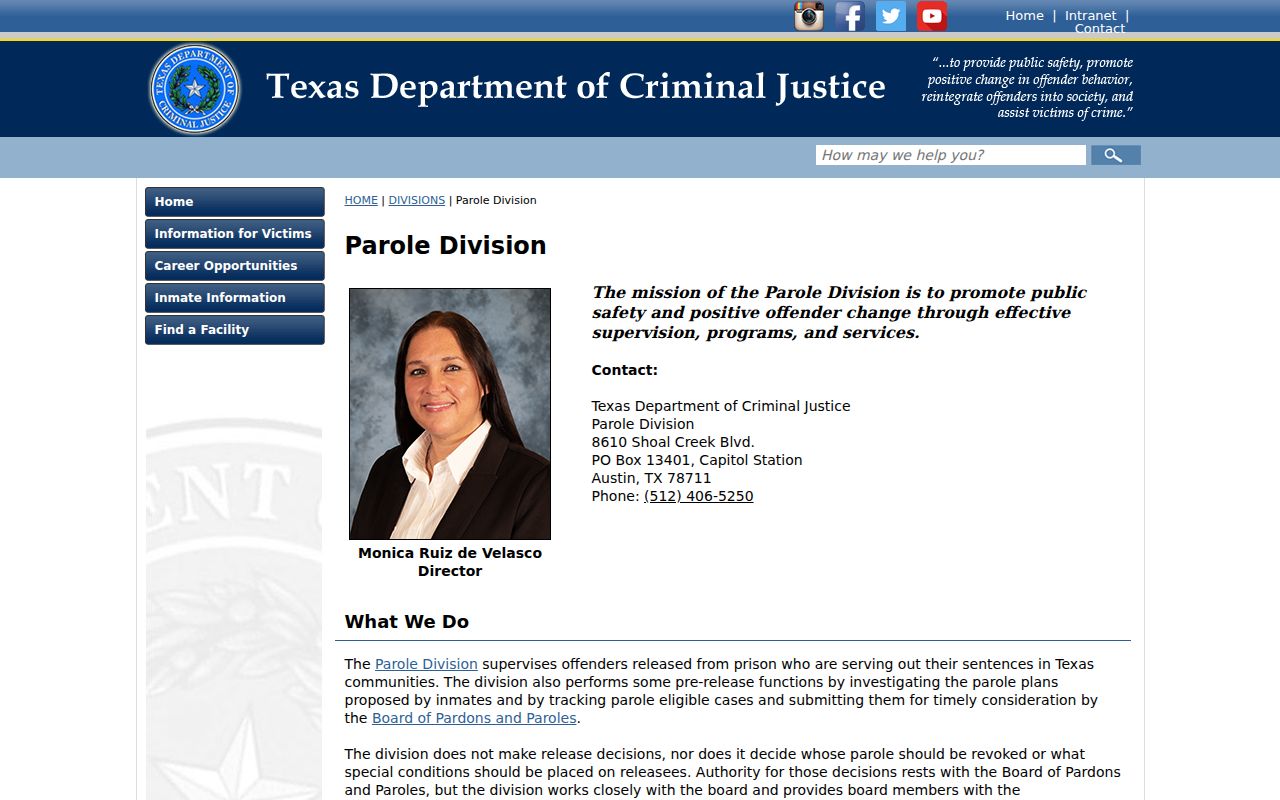
Parole supervision and sex offender registration can overlap, but neither record should be read as a substitute for the other.
The Texas Board of Pardons and Paroles source identifies the separate authority that makes release and revocation decisions.
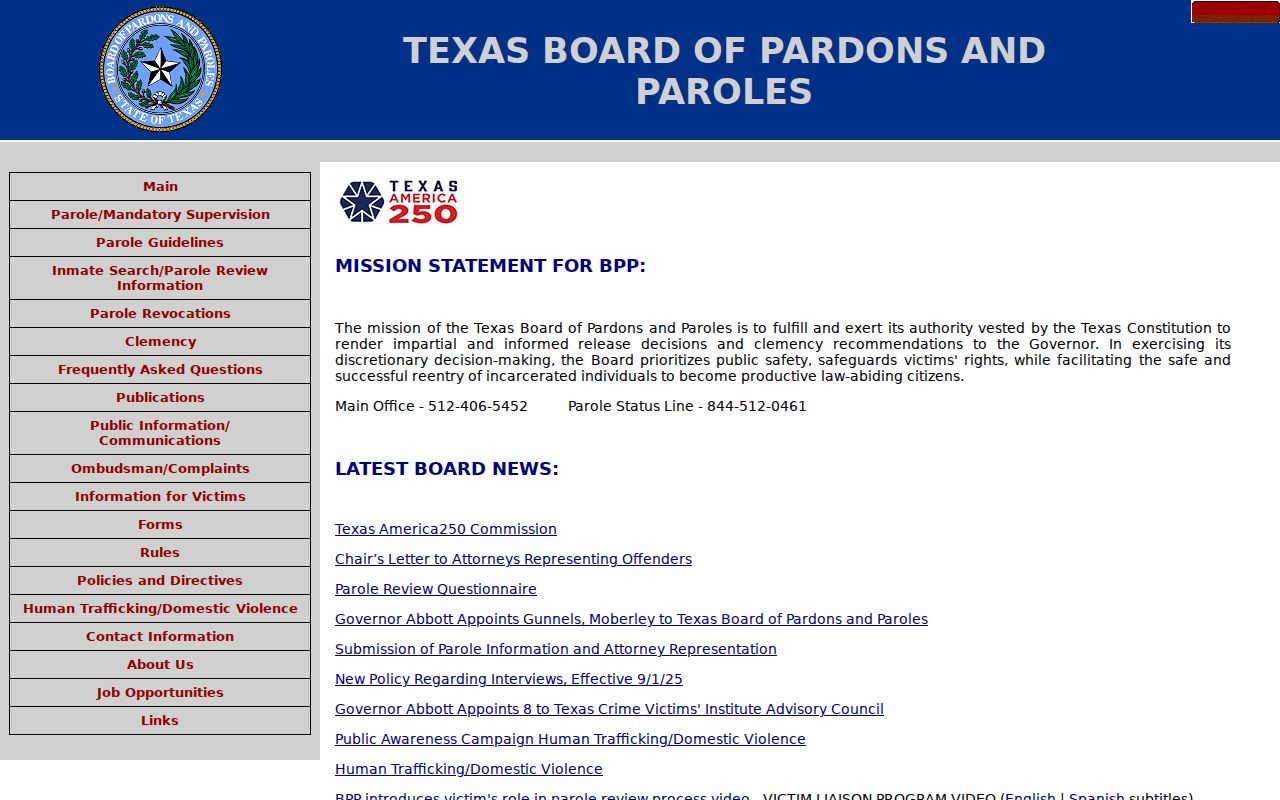
A Board record concerns a release decision, while DPS and the registering agency control the registry information used in a Trinity County offender search.
NSOPW Extends Trinity County Searches
The National Sex Offender Public Website adds a cross-state search across participating public registries. It is useful when a person may have moved, when a last known location sits near a state line, or when the Trinity County DPS result does not resolve the question. NSOPW supplements the Texas registry. It does not replace the detailed Texas profile or the local registering agency.
The national search source illustrates that broader layer for a Trinity County search without displaying a registrant's private details.
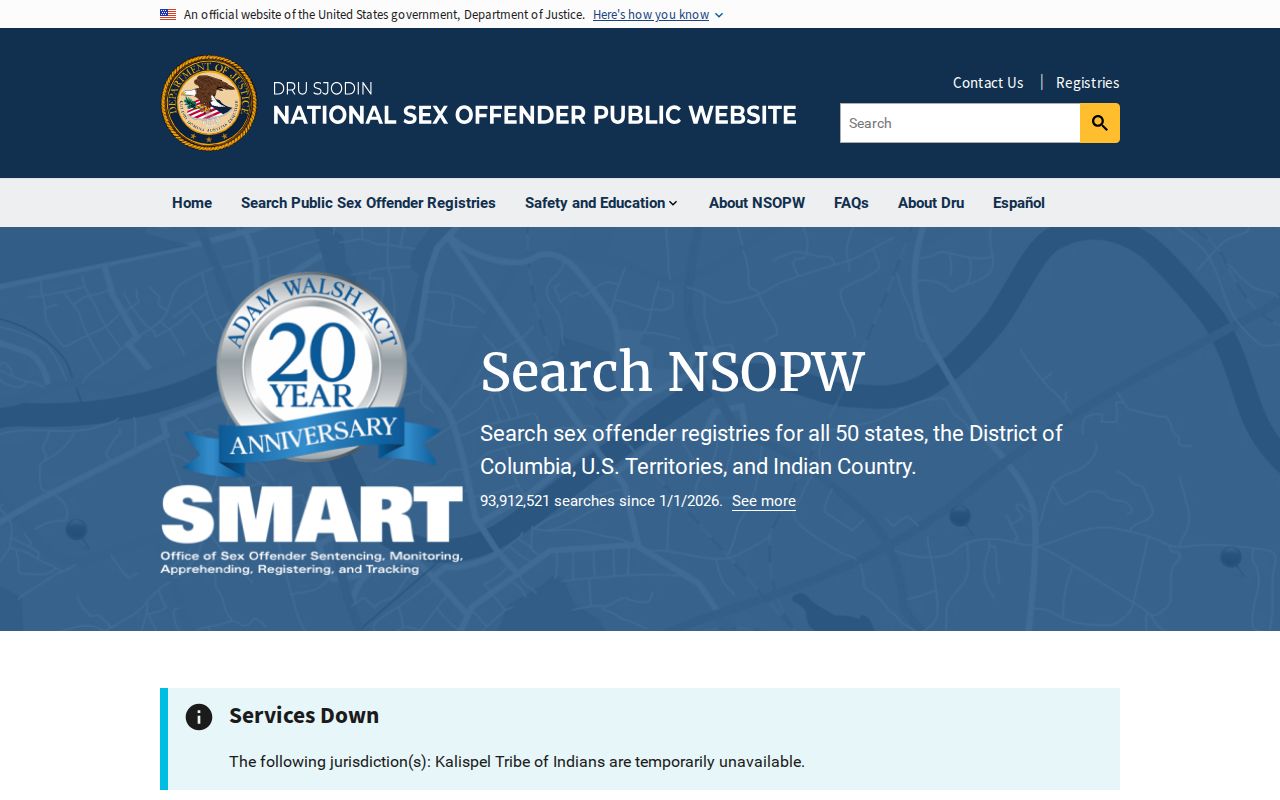
Return to the Texas profile in the Trinity County result for offense, status, and agency fields after finding a possible match through NSOPW.
A federal custody lookup answers a different question. The Federal Bureau of Prisons locator source can locate a person in federal custody, but it is not a sex offender registry and cannot clear or confirm a Trinity County registration duty.
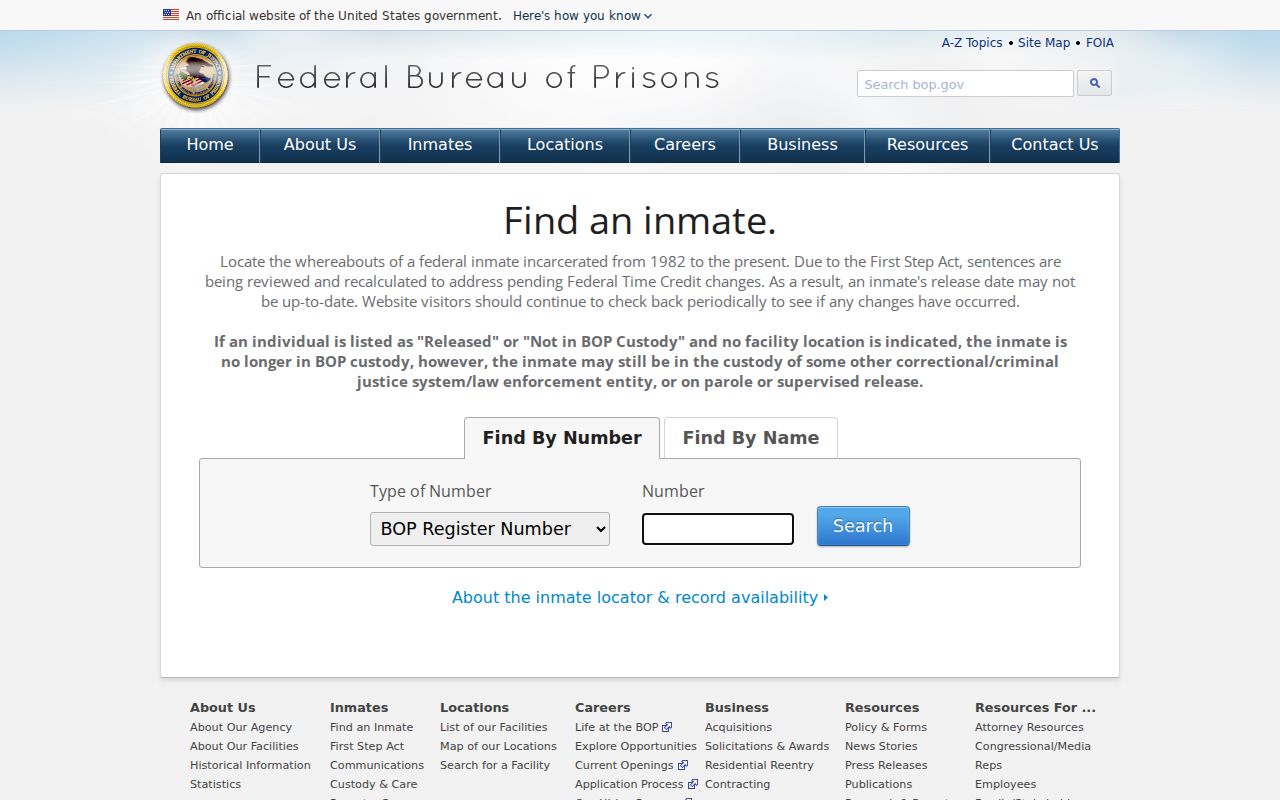
Keep custody status tied to a Trinity County search, release decisions, and public registration status in their correct systems.
Stale Trinity County Registry Addresses
An old-looking Trinity County address is a reason to verify, not to investigate a person yourself. First, reopen the Trinity County profile and check the status, verification information, address type, and registering agency. Next, repeat the Trinity County search by name and county to rule out a second listing or a simple map-view issue. Then save the public record details needed to describe the concern.
Report suspected noncompliance to the Trinity County Sheriff's Office when it is the listed or responsible local agency. If another agency appears on the profile, use that office. Provide facts such as the profile name, displayed address, and the reason the entry appears inconsistent. Do not trespass, follow, photograph, threaten, or approach the registrant or household.
Note: Registry verification dates are useful clues, but the responsible law-enforcement agency decides whether a reporting violation may have occurred.
Trinity County Registry Residency Limits
A map pin should not be read as proof that a registrant violates a distance rule. Texas does not impose one simple statewide residency-distance limit that applies to every person on the registry. A city ordinance, a condition of parole or community supervision, or a term in a particular judgment may govern one person's residence.
Start with the source of the claimed limit. A court judgment or supervision condition has a different legal role from a city rule, and the public registry profile may not reproduce the full text. Contact the relevant court, supervision authority, or local government for the exact provision. The registry confirms public registration information. It does not decide every land-use or supervision question shown by a map.
Community Notification and Lawful Use
Registry information supports personal safety, family planning, and community awareness. It can help a resident understand a public record and share a factual concern with law enforcement. It does not grant anyone power to punish, threaten, remove, or confront a person. A map result also does not settle the legal effect of a local rule, supervision condition, or court order.
Texas has no single statewide residency-distance rule that can be safely applied to every registrant. A local ordinance, a parole or probation condition, or a term in a judgment may create a limit for a specific person. Confirm the source of any claimed restriction before treating it as law.
Misuse can lead to prosecution. DPS warns that registry information may not be used to injure, harass, or commit a crime against a registrant or that person's family. Use public information only for lawful awareness, consistent with Texas Code of Criminal Procedure Chapter 62.
For a possible reporting violation, contact the agency shown on the profile. For an urgent threat or crime in progress, use the proper emergency channel. Those steps preserve both safety and the accuracy of the report.